Fly Fishing Traditions


Fly Fishing Traditions Blog and Website
"It's about Life & Fly Fishing"
Showing posts with label Stillwater. Show all posts

Thursday, September 17, 2015

Chironomid 101 - Part l - Chironomid Facts and Tips


As they used to say in the TV show Dragnet. "Just the facts, Maam" Here's some Chironomid facts and Tips to get us started with Chironomid 101. It's an introduction to this important stillwater bug.

Chironomids are the food source eaten more often than any other. I attended Phil Rowley's Stillwater Scholl where he compared them to M&M's. You put a bowl of M&M's on a table and you just grab handfuls and keep eating. Trout do the same when they feed on chironomids. Let's look at some facts about chironomids.

Seasonal Availability


  • Larvae are available all season long, 12 months of the year
  • The emerging pupae and adults are available two times a year. They become a main food source for stillwater trout in;
(1) April through June
(2) August through October

  • With that said about the pupae, chironomid larvae or "bloodworms" are available for trout all year long and are a main food source for all stillwater trout all year long.
  • Bloodworm patterns are a good choice during low light conditions and after recent windstorms.
  • Chironomid Pupae patterns can also be used throughout the season as they have elongated emergence cycles. Trout will often take chironomid pupa patterns regardless of the season.
Fishing Tips for Chironomids
  • When trout are found in water 20 feet or less, use a floating line and slip indicator. Start with suspending the flies one to two feet off the bottom. make sure you are just above any weeds.
  • Experiment by moving the fly up one foot at a time to locate feeding fish. Sometimes 6 inches can make a difference.
  • In water 15 feet or less also try using use a floating line and a long leader. This is called the "Naked Technique". Use a fly line like the Rio Indicator Line that has a orange 18" tip which will be your indicator. Takes will be seen as a movement by the orange tip rather than felt.
  • When using the "Naked Technique", your leader should be 25% longer than the water is deep.
  • When using the "Naked Technique" you must balance 4 variables.
(1) Leader Length
(2) Retrieve Speed
(3) Pattern Weight
(4) and the time to allow the pattern to sink
  • Wind drift larva and pupa patterns by quartering across the wind and allow the ripple to swing through the water column. Watch the orange tip of the fly line for any movement.
  • When fishing for chironomids in water over 20 feet deep use a full sink line, a type VI or VII and retrieve the fly vertically through the water column. Cast only the amount of line and leader as the water is deep. Count the flies down and use a shorter leader.
  • Remember that when presenting imitations for the chironomids larva and pupa, the retrieves must be so slow that they are almost static.
  • When fishing on the surface, pay attention to whether the trout are taking skittering or stationary adults. Present your flies accordingly.
  • When trout are taking chironomids on the surface consider using a soft hackle retrieved slowly through the area of rising trout.

Chironomid Larvae Patterns

Size - 3/8" to 1" - Hook sizes #8 through #16 - A size #12 2x long is a good average size larva pattern

Shape - Slender, segmented and worm-like

Color - Many species are able to generate hemoglobin in order to survive in oxygen poor conditions.
  • As a result scarlet red or maroon coloration is common.
  • Larva can generate hemoglobin as conditions dictate which affects coloration. Candy Cane schemes of red and green are common on some lakes.
  • Olive and bright green are other common colors
Chironomid Pupae Patterns

Size - 3/8" to 1 inch, hook sizes #8 - #18
  • Chironomid tend to be larger in mud bottomed, algae type lakes. Sizes #12-#8
  • In clear water lakes, Chironomids are smaller $10 -#18
  • A #12 is a average pupa size and a good place to start.
  • If trout do not appear to be selective to size try using one size larger so your fly will stand out from the naturals.
Shape - Comma-like shape.
  • Many pupa patterns use scud pupa hooks to suggest the profile
  • Most patterns have a bulbous thorax, slender segmented, tapered abdomens
  • In clearer water or on lake with much angler pressure consider using slim realistic patterns.
Colors - Black, maroon, brown, olive, shades of green, tan.
  • On dark days, use dark patterns.
  • On bright days use bright patterns
  • Pupae use trapped air and gases to aid pupal ascent and the adult transformation. This gives pupae a distinct silver glow.
  • Pupae can change color as they absorb or replenish trapped gases
  • Chironomids pupae have prominent white gills. The Chaoborus pupae do not.
  • Use Super White beads in algae stained waters. They tend not to fouls as much as synthetic or natural materials do.
Chironomid Adults

Size - The adults are smaller than the corresponding pupa.
  • Sizes #10 - #16 covers most adults
Shape - Similar in look to adult mosquitoes.
  • Chironomid adults do not bite like mosquitoes.
Color - Colors mirror those of the pupa. recently emerged adults are bright. Their body color darkens once it hardens.

Friday, August 29, 2014

Slip or Quick Release Indicators


One of the preferred tactics of many stillwater experts is the use of a slow almost painful retrieve especially when using chironomid patterns. This technique is often done "Naked", which is without and indicator. In order to fool the largest and most challenging fish you must sometimes retrieve the fly at a maddening creeping pace. This pace is often referred to as static. Sort of like watching paint dry.

When targeting greater depths, 10' to 20' many of these anglers have used indicators. The technique evolved using corkie indicators set to depth and fixed in place with a toothpick to enable the angler to present flies right on the bottom where they need to be. In the past toothpicks have been the most popular method of pegging the indicator to the appropriate depth. The only problem was that when a fish was hooked, the anglers risked loosing the fish by having to grab the line during the battle, using their teeth to remove the toothpick. The indicator slid free for the balance of the fight. With the newer evolution of "Slip" or "Quick Release" indicators, the battle of removing the toothpick is now over.

What has come to be the technique of choice for fishing water over 10 feet and up to 20 feet is the use of "Slip" or "Quick Release" Indicators. The Slip Indicator uses a concept so simple it makes you wonder "What took so long". The system uses an over sized peg that the leader is fed through and then pegged to the "Corkie" style indicator. The Slip Indicator system allows a fly fisher to fish deeper waters with confidence.

In actual practice, to rigg the indicator you thread the indicator and peg onto your leader, gather and pinch the leader and then push the leader against itself to create a loop of approximately 1" in diameter, just slightly shorter than the peg sticking out of the indicator. The peg wants to be pointed to the fly not the fly line. Push the peg with firmly but not too tight into the indicator.

When the strike comes, lift the rod and the tension between the angler and fish releases the loop and the indicator is free to slide. The cumbersome method of removing a tooth pick is gone.

Slip Indicator Tips

  • When fishing with slip indicators the technique is almost static. It is primarily "Heave it and Leave It".
  • If the choice is to move the indicator at all, use a pinch strip, holding your hands together and moving the indicator an inch at a time, very slowly.
  • You can use use a 6" to 12" strip with a steady and very slow motion.
  • OK, how slow is slow? When fishing indicators, imagine you are sitting on a keg of dynamite. When retrieving, if you see any ripple of water moving at the indicator or from the floating line, you blow yourself up. That slow!
  • When fishing leeches under indicator, try casting straight up wind and hand twist retrieve it as the wind pushes it back towards you. You are really just gathering line not trying to move the flies.
  • Use wind drifting to fish the indicator rigg.
(a) Anchor with fore and aft anchors parallel to the wind.
(b) Cast across wind at a 90 degree angle to your anchored position
(c) Let the wind move your indicator along with the wind
  • Remember insects can't swim against the wind they drift with the current.
  • Start with your flies 1' to 2' off the bottom. Then work up the water column until you find willing fish. 6" can make a difference especially with rainbow trout.
  • Focus on water that is less than 20' deep
How do you Determine Depth

How do you determine the depth of the water you're fishing in. You can get a rough idea from using your electronics, fish finder with a depth sounder, to get a ball park. But to get it right, you need to test the depth. Anchor your boat fore and aft and test the depth where you plan to fish.

(a) Set your indicator to the approximate depth as determined by your depth finder
(b) Attach weight to your point fly (bottom fly).
(c) You can attach your hemostats to the fly or a weighted sinker
(d) Lower the fly with the weight slowly until it gently hits the bottom.
(e) Check to see how far the indicator is under the surface of the water.
(f) This will be the depth of your point fly off the bottom when you remove the hemostats or weight.
(g) Adjust the indicator accordingly to the desired depth to be fished. You want to start at 1' to 2' off the bottom or the weeds.

Use "Balanced Flies"

Try using balanced flies. Tie up some balanced flies, like a "Balanced Leech". This style of tying incorporates a tungsten bead mounted on a common straight pin that extends from the hook shank in front of the eye. The tungsten beads work best as their dense mass maintains an overall compact fly. The horizontal balanced flies take on the natural path and profile of most aquatic food sources. Their pitching and jigging action is tough for fish to resist. Try tying up a balanced leech or scud and see how they work.

You can get tying instructions for "Balanced Leeches" at Phil Rowley's www.flycraftangling.com. His site is full of stillwater fishing tips and techniques. Check it out!

The "Balanced Leech" photo is courtesy of Fly Craft Angling.


How do you Rigg your Leader for Slip Indicators

  • Start with tying a stiff piece of 24" monofilament to the fly line with a nail knot.
  • Tie on a tapered leader, 9' to 15', 3x or 4x with a blood knot. If the budget allows fluorocarbon leaders are ideal. Especially when targeting water about 10' deep.
  • With the butt section and leader in place simply add fluorocarbon tippet to reach the overall finished leader length.
  • Add a swivel or tippet ring at the end of your extended tippet to insure you won't lose the peg from your indicator in the case of a break off.
  • Install the swivel 18" to 24" above the 1st fly.
  • You can tie a dropper right off the swivel or tippet ring.

How do you determine the length of the tippet?

A simple rule of thumb to follow is the overall leader length should be 25% longer than the water is deep. For example, working a chironomid pupa in 15 feet of water would require a 19-foot leader.

How to you Rigg the actual Slip Indicator

  • Slip indicators come in various sizes, colors and shapes. Carry many options.
  • The common denominator is that they all have a peg to fix the indicator in place.
  • This peg comes loose when a fish takes your fly and tightens the line. The peg and the indicator drops to a swivel or tippet ring placed above your flies.
  • Carry swivels and/or tippet rings to keep from losing your indicator and mainly the peg. The indicator would float to the surface if you broke off, the peg won't
  • When installing the indicator the peg faces the flies.
  • You can tie a dropper off the swivel or the tippet ring as an option.
  • Use a dropper tags to attach the droppers. Keep them shorter than 10".
  • Maintain a spacing of about 3 feet between your flies.


Casting Indicators

  • Keep casts short, 30' to 35' is ideal
  • Use a roll cast combined with roll cast pickup to recast your rigg.
  • Use small indicators to keep yourself honest and keep the indicators close enough (30' to 35".
  • When casting, open up your loops, break your wrist slightly. Apply smooth power. Don't punch your casts.
  • Make sure your backcasts lay out behind your completely.
  • Try integrating a "Belgian Cast".
  • Shoot your line to the target.
  • Watch for distinct plops of your indicator and the flies laying out to make sure you're not tangled.
Summary

Add "Slip" or "Quick Release" Indicators to your stillwater strategies and you will take your stillwater game to a new level.

You can purchase Phil Rowley's Slip Indicators at his website, www.flycraftangling.com

Tuesday, August 26, 2014

Double Anchoring Your Pontoon Boat


I had the unfortunate experience of fishing an Idaho Lake a few weeks ago when the wind started blowing and gusting like crazy. I was fishing in my pontoon boat and I was soon swinging and swaying with the wind. Trying to cast and present my flies where I wanted to was downright impossible. I essentially gave up. There were some other people fishing out of double anchored boats and they were fishing comfortably and having no problem at all. They were catching fish and I was trying to just stay in one place. Luckily the wind died down and I was able to continue fishing. I've learned my lesson.

My older "Water Skeeter" pontoon boat and most other pontoon boats come with a rear anchor system which is helpful with controlling stillwater presentations. Until the wind really starts blowing that is! I've found that whether you are fishing out of a pontoon boat, float tube or boat, line control during the retrieve is critical. When the wind starts blowing rear anchored pontoon boats spin and sway around the rear anchor, which really challenge your presentation control and for me, my patience.

To solve this problem I purchased a "Scotty" Anchor cleat with an additional rail mount accessory. By adding a second anchor cleat to the front frame of my pontoon boat, it has really helped the spinning and and swaying when the wind comes up. I had to fuzz with my rail mount a bit, but it works really well. I mounted my forward anchor on the left frame rail, just before the right angle turn for the foot peg. My theory was that as a right handed caster this placement keeps my fly line away from the anchor cleat. So far this has worked out well.
I am using a 5 lb. pyramid anchor that I had laying around and it seems to hold well enough. It definitely has kept the swaying around down. I've found that if I first set rear anchor I can then lower the front anchor and I'm good to go. My frustration with the wind has literally blown away. I can now concentrate on the fishing.

The sad part is that I'd already purchased the "Scotty" Anchor cleat before I'd gone fishing on that lake in Idaho, I just hadn't mounted it yet.

Lesson Learned!

Saturday, August 23, 2014

10 Tips for Stillwater Success


Becoming a knowledgeable and proficient fly fisher on stillwater lakes means spending the time to learn how these ecosystems function. This includes;

  • Learning the structure of the lake
  • What food sources are present
  • The preferred habitat of the trout and other game fish species
  • Knowing the best times of the year to catch these fish.
Lakes are much more mysterious in offering hints as to where the trout are going to be found as compared to rivers and streams. In rivers and streams there are currents to dictate where fish can live or that determine prime aquatic invertebrate habitat. For these and other reasons, many fly fishers lack the confidence when fishing lakes and many times just never even get started.

Understanding lakes can be like a riddle, where we solve small portions of the riddle and eventually have the complete picture. Here are 10 tips, from Brian Chan, a professional fisheries biologist, to help solve the riddles of productive stillwaters found anywhere and will give you the tools to be successful. You can find many more articles of his at www.chironomid.com

Tip #1 - Know Where the Trout Live

Know the zones!

Lakes can be broken down into 3 distinct areas or habitat zones. The shoal or littoral zone is the shallow water area of the lake, the water from the shoreline out to about the 25 ft depth zone. This also coincides with the depth of maximum sunlight penetration which is a key factor in determining overall lake productivity.

  • Habitat Zone #1 - The shoal is where the vegetation grows and where the majority of aquatic food sources are found. The shoal is the grocery store and the trout come onto the shoal for food. It is the most important area of the lake when it comes to catching trout.
  • Habitat Zone #2 - The drop-off zone is where the edge of the shoal zone transitions to the deeper parts of the lake. The slope of the drop-off can be gradual or quite steep. Drop-offs are also the maximum point of green plant growth so are also a perfect fish feeding area as well as offering refuge from the warmer shallow waters during the hot summer months. This habitat zone is relatively short or narrow as the water quickly deepens to the deep-water zone of a water body.
  • Habitat Zone #3 - The deep-water zone supports the least amount of macro invertebrate (insects and other larger food sources) habitat. However, in many lakes the deep-water or mid-lake zone supports fairly prolific chironomid populations and subsequent emergences.

Tip #2 - Watch the Birds

Aquatic insect hatches can often be confined to certain shoals or specific locations within a lake. Often, on larger water bodies, a certain color chironomid can be emerging in one bay and a totally different size and color pupa emerging in another bay. Birds, such as swallows, terns, gulls, and night hawks, find emerging chironomids, mayflies, caddisflies as well as other hatching insects much more quickly that we can. Binoculars are valuable in seeing bird activity and especially when fishing larger lakes.

Tip #3 - Look On and Into the Water

Carry a small aquarium net to capture pupae, nymphs, emergers and adult insects so you can match fly patterns to size and color. Place the specimens in a vial or white dish to get a better idea of color and to watch the actual emergence process. Surface and sub-surface feeding trout leave distinct riseforms that provide clues to the angler as to what insect stage they are selecting. Trout feeding on minnows often show chasing/slashing rises as they work through the school of baitfish. And finally, polarized sunglasses allow you to see better beneath the surface to spot shoals, drop-offs, spring areas, and bugs.

Tip #4 -Know Your Insects and Other Food Sources


Learn to recognize the major aquatic invertebrate food sources that make up a large percentage of the diet of trout in many stillwaters such as;
  • Chironomids (midges),
  • Mayflies
  • Caddisflies
  • Damselflies
  • Dragonflies
  • Waterboatman
  • Backswimmers
  • Scuds
  • Leeches
  • Snails
  • Forage fish.
Equally important, have a sound understanding of their individual life cycles and habitat requirements. Getting to know a particular lake or group of lakes translates into learning which food sources are present and knowing the emergence sequences peculiar to those individual waters. Many good reference books cover identification, life history and distribution of the most common stillwater invertebrates. These insects' life cycles and emergence patterns are similar regardless of where a lake is geographically located.

Tip #5 - Water Temperature

Water temperature influences the hatches, and each insect order has preferred temperature ranges for development and emergence. Insect hatches follow a seasonal sequence that typically begins with midges, followed by mayflies, then damselflies, caddisflies and lastly dragonflies. The most intense emergences typically occur when surface water temperatures range between 50° F and 65° F. It is possible to see multiple insect orders and species emerging at the same time which can be confusing to both angler and fish. Anglers must rely on their knowledge of individual insect emergence strategies and be prepared to present all options to those feeding fish.


Tip #6 - Carry a Basic Selection of Fly lines

Stillwater anglers should be prepared to present flies from the surface to depths of over 40 feet. An understanding of individual insect order life cycles will dictate what depth zones may be fished when that particular food source is emerging or is readily available. Floating fly lines cover the shoal zone, water between 2 to 20 feet in depth, and are ideal for presenting floating, emerging, pupal, and nymphal imitations. A slow or intermediate sinking is a good line for fishing the deeper parts of the shoal such as water between 10 and 20 feet deep. This line allows slow presentation of pupal and nymphal patterns while ascending at a gradual angle towards the surface. A fast or extra fast sinking line provides good coverage of the 20 to 40 foot depth range and is useful for fishing dragonfly nymphs, leeches and shrimp along the deeper edges of drop-offs or retrieving flies up the face of the drop-off.


Tip # 7 - Fly Selections


Do some homework to learn what insects and other food sources are in the stillwaters you will be fishing. Local fly shops, fly fishing clubs, and regional fishing guidebooks are good sources for this information. The ideal fly box will have both generic imitations of food sources plus some refined patterns that more closely imitate the various life stages of insects found specifically in those waters. There are many good commercially tied fly patterns covering all the important food sources of trout and char in lakes. It is no longer a disadvantage to not being a fly tier. Basic sub-surface patterns that should be in your stillwater fly box include:

  • Leeches in black, maroon and dark green and with and without beadheads
  • Dragonfly and damselfly nymphs in light and dark olive body colors
  • Shrimp or scud patterns in light olive to dark olive
  • Mayfly nymphs in dark brown to tan
  • Caddis pupae in medium green to brown body colours
  • Chironomid pupa: chironomid pupal pattern colours include black, brown, green and maroon with abdominal ribbings of copper, red-copper, silver or gold wire
  • Dry flies to imitate the adult caddis, adult mayflies, and the adult chironomid

Tip #8 - Proper Boat Setup

  • Flat Bottom Boat or Pram - A stable flat-bottomed boat or pram is often the most effective way to fish the smaller trout lakes. The biggest advantage to a hard-bottomed craft is that one can stand up and look out over and into the water. This is a particular advantage when fishing clear water lakes as individual fish or schools of fish can be spotted and observed as to feeding behaviour and movement patterns.
  • Pontoon Boats - Pontoon boats are another good choice as the angler sits high enough in these craft to see into the water. Some pontoon boat manufacturers are now offering standing platforms. Both boats and pontoon boats can be moved from area to area much faster than a float tube. This can be critical when trying to locate specific insect emergences when fishing a larger water body. Hatches can occur at one end or bay of a lake and be non-existent in another location.
  • Depth Sounder or Fish Finder - Another essential tool for the stillwater fly fisher is a depth sounder or fish finder. We need to know the depth we are fishing so that flies can be presented in the right depth zone. Depth sounders are relatively inexpensive yet highly sensitive instruments. Things to look for in a sounder include the transducer cone angle which should be at least 50° wide or wider. This allows greater coverage of the bottom structure under the boat and thus increases the chance of marking fish. Remember the majority of fly fishing done in productive lakes is in water less than about 8 meters in depth and often in less than 5 meters. Consider the power source of the sounder as some units can go through smaller sized batteries at a very fast rate. Many sounder units come wired to run off a large 12-volt battery such as the one used to power your electric motor.
  • Noise Suppression - Fishing out of a boat can be noisy, particularly if it is made out of aluminum. Reduce the chances of scaring fish by fitting outdoor carpeting over the floor of the boat. Always keep in mind sound travels fast in water and trout have sensitive hearing systems.


Tip # 9 - Double Anchoring

When fishing out of a boat it is critical to have anchors out both bow and stern. This is especially important if there are 2 people fishing out of the same craft. Double anchoring prevents the boat from swinging back and forth when the wind is constantly changing direction. A stationary boat allows the best control of fly lines and retrieves. It is important to have as straight a line connection between the fly rod, fly line, leader and fly as possible so that even the softest bite can be detected. Simple anchor control pulley systems make lifting, storing and re-setting anchors easy while at the same time requiring little movement within the boat.


Tip #10 - Learn about Preferred Food Sources

Trout that become focused on a few dominant food sources in a lake can often become difficult to catch. Small nutrient rich lakes often support immense chironomid and scud populations. Anglers that have consistent success in these waters have learned the details of the life cycles and habitat preferences of these preferred food sources. For instance, when chironomid pupae suspend just inches off the lake bottom, often for several days, as they complete the transition from the larval to pupal stage, there can be great fishing even though there is no sign of any emergence at the surface.

When searching out a new lake, slowly troll or drift and cast around the basin while getting a good look at shoals, drop-offs, weed beds and perhaps sunken islands. Dragonfly nymphs and leeches are always good searching patterns. Both invertebrates are common inhabitants of lakes and both are big food items. Don't be afraid to try flashy or bright patterns like bead headed woolly buggers and be prepared to vary speed and direction frequently when either trolling or retrieving a cast fly.

Credits
These tips have been taken from articles written by "Brian Chan" a professional fisheries biologist. You can find lots of stillwater essays and tips at the website www.chironomid.com

Wednesday, August 20, 2014

Indicator Options for Stillwater

When fishing stillwaters either in the shallows or weed pockets, in depths over 10 feet and up to 25 feet integrating indicator tactics can pay big dividends. Phil Rowley showed me the many benefits of using indicators at his Stillwater School. Here's some Stillwater Indicator tips.

By integrating Indicators into your stillwater strategy you will be able to:
  • Avoids snags and fouling
  • Work shallow water depths
  • Work weed pockets and above debris and weeds
  • They will give you the ability to surgically control depth and retrieve speed.

Indicator Versatility

Using indicators for fishing stillwaters is not just for chironomid fishing.

  • Of course one of the best uses for "Slip Indicators" is for presenting chironomid larva and pupa patterns near the bottom. It is probably the most effective method.
But you can also use indicators for;
  • Water boatman, scuds, leeches and smolts
When are he best times to to use indicators
  • For presenting Chironomid patterns close to the bottom
  • Use when fish are sensitive to depth and holding at a particular level.
  • Ideal for fishing shallow water depths above or between the weeds.
  • You can use "Slip" or "Quick Release" indicators to fish to depths of 20 feet.
  • Allows you to surgically fish right above weed beds and into weed pockets.
  • Great for kids or inexperienced anglers.
  • Good for fishing alone and using two rods when legal.
Types and Uses of Different Types of Indicators for Stillwaters

Yarn Indicators

Yarn indicators are best when the indicator is set at 12' or less. A yarn indicator is set in a fixed position, so the 12 foot depth is based upon how far you can reach to land the fish in your landing net standing in a boat, probably not more than 12 feet. If fishing from a pontoon boat or a float tube you must set your yarn indicator shorter. They are good for crystal clear water. In crystal clear water use a white indicator.


Dry Fly as Indicator


If you're a stream fisherman you're probably well aware of using Dry Dropper techniques. This can also pay off when fishing stillwaters. You can imitate two stages of an insect. Using a dry fly as an indicator is excellent when trout are in the top third of the water column. In the wind the larger the waves the larger the fly. You'll want to keep the fly spacing in stillwaters 3' to 5' apart depending where the fish are feeding.

As a note, I was fishing a crystal clear lake in Montana a few weeks ago and I was sight fishing to big cruising rainbows. They were not interested in my sinking line presentations. I rigged up with a size 16 Parachute Adams and trailed a black and red Chironomid pupa 4 feet below it. I was able to fool a number of finicky rainbows with the dry dropper rigg. It works!

To rigg a Dry Dropper leader, use a 9' to 12' tapered leader with an added 2' to 3' of tippet. Keep your tippet a minimum of 2' long. If it get's shorter clip it off and tie another 3' tippet on.

Corkies

Corkies are available in solid or bi-color and are typically held in place by toothpicks. The Bi-color ones are great for signaling tangles. They are an old standard but still effective.

Quick Release Indicators or Slip Indicators

Probably the most versatile and popular indicators for stillwaters are "Slip" or "Quick Release" indicators. They allows the stillwater angler to probe deep water up to 20 and even 25 feet deep. The indicators are available in many sizes and shapes. They use a peg that releases when you have a fish on and when the indicator reaches your rod tip the peg pops loose and the indicator and peg slides towards the fish. You'll want to use a swivel or tippet ring to make sure you don't lose the peg if the fly breaks off. A swivel will hold everything safely in place.

Indicator Leaders
  • Hybrid leader - Use a standard tapered leader.
  • Or even better try a tapered "Rio Indicator Leader". This is an excellent leader for chironomid fishing or whenever you need the flies to sink fast. The 10 ft tapered leader has a short orange butt section for fishing "Naked". It's Level tippet does not slow down the sink rate. The heavy butt section makes casting the indicator easy
  • Add a 24" butt section to your fly line using .025 or .030 material with a nail knit. Use a Fast-Tie Tool.
  • Add a 10 foot Rio tapered Indicator leader using a blood knot, 3x or 4x
  • Add Fluorocarbon tippet to complete leader with a Triple Surgeon's knot


General Indicator Notes
  • Carry all types in your "Stillwater Kit Bag".
  • Carry different colors - People see colors differently
  • The mood of the fish may dictate size, type and color
  • When fish are being sensitive, use a tapered or a small round indicator
  • Use a fly line like a Rio Indicator Line or a Rio Grande Line
Summary
Add a collection of indicators to your stillwater kit bag and you will take your stillwater game to another level

Friday, August 15, 2014

Checking Water Temperatures to Locate Stillwater Trout


I spend a lot of my fishing time out of a drift boat on a Northern California tailwater. I don't really pay much attention to water temperatures. The water being released from a dam stays pretty consistent. It's more about the flows. With stillwaters its a whole different story. It's all about water temperatures

By checking water temperatures we can eliminate non productive water. All fish have a preferred temperature range where they are most active. For most lakes that have rainbow trout, it is recommended to use a scale of 55F to 65F. When temperatures are in this range the trout’s metabolism will be at its peak and it should be feeding. Keep in mind that as water temperature increase, the trout's ability to hold oxygen decreases. As a result trout avoid high temperatures in excess of their comfort zone and will move to areas of the lake that have cooler temperatures, typically deeper or areas that have springs or inlet streams


With this information we may deduct that one of the most valuable tools in a stillwater kit bag is a thermometer. When this is attached to a cord you can probe and test water temperatures in different areas of a lake and different depths.This will help you locate trout.

You should start testing water temperatures in the shallow food rich areas around 10 feet deep. Lower the thermometer into the water and note the surface temperature. If it falls within the trout’s comfort zone chances are trout will be in the shallower littoral zone. Should the temperature exceed the range the shallow reaches will probably be avoided. Move out to deeper water between 10 and 20 feet and lower the thermometer into the depths. Allow it to adjust and then quickly raise it to determine the temperature. Continue eliminating high temperature water to find trout.

Rainbow Trout prefer temperatures in the range of 55 to 60 degrees F. Although they will tolerate temperatures as high as 65 degrees F.


Brown Trout can be found in water with much warmer temperatures in the range of 60 to 70 degrees F.


Brook Trout prefer cooler temperatures in the range of 52 to 56 degrees F.


Cutthroat Trout prefer temperatures in the range of 55 to 65 degrees F.


During the heat of summer the combination of bright light and high water temperatures usually drives trout into the deeper reaches, often over 15 feet deep.

When fishing in waters where the water temperatures are in the upper comfort zone zone for the trout species caught, be aware that if you hook up and play a trout hard it may be hard for it to recover as a result of lactic acid build up and the reduced dissolved oxygen. This may likely be a lethal for the trout.

When temperatures get this high it may be best to go fish a tailwater instead.

Tuesday, August 12, 2014

Countdown Chart for Sinking Lines


It's a good idea to make up a "Countdown Chart" for fishing your sinking lines. This was brought to my attention at Phil Rowley's Stillwater School. We all are probably guilty of not counting down our sinking lines properly. We cast them, let them sit for a bit and start retrieving. We need to be more disciplined if we are targeting and want to work a specific depth of the water column. Especially for chiromomids and leeches.

I made up a chart with my the different types of sinking lines across the top of the chart and with depths running vertically along the left side. I did my chart in one foot intervals of depth from 1 foot to 20 feet.

The lines were broken down as;

  • Standard Intermediate at 1 1/2" per second
  • Cortland Clear Camo at 2" per second.
  • Type III at 3" per second
  • Type IV at 4" per second
  • Type V at 5" per second
  • Type VI at 6" per second
  • Type VII at 7" per second
I'm going to laminate this chart and carry it in my kit bag and have it readily available. I'll use my watch to count down the lines to the desired depths. This may seem a little extreme, but I'll use it until I get more comfortable with my different lines and their associated sink times.

Count down your lines properly, use your watch and you will cover the full range of the water column properly and hopefully hook up more often.

Monday, August 4, 2014

Stillwater Kit Bag

When fly fishing there are some things we can control and some things we can not. We have no control over our weather or our physical environment such as water temperature, barometric pressure and wind. Our fly fishing equipment is controllable. If we as fly fishers focus on what can be controlled, we will be better prepared for what we cannot. If our equipment is in order and we have everything we need, we will be consistently more successful.

On any given day it's what you have in your arsenal as opposed to what you left at home that can make a big difference. A well stocked and organized kit bag can make this difference. A kit bag is your stillwater nerve center that should be ready to go at a moments notice.

The Stillwater Kit Bag

Let's take a look at the kit bag itself and what you should consider when getting one. It must be portable and have enough compartments, pockets and sections to house a wide array of gear. This allows you to sort and store equipment in a logical and easy to find fashion. You must develop a system and have discipline to make sure items are put back in their place. Take the time to put everything back in its place after each day of fishing. This is not always easy. I'm often tired at the end of a day's fishing and just want to get on the road and home as soon as possible. Its a case of "just do it".

Look for a bag with good strong zipper systems. Be wary of bags that have pockets that zip around 90 degree corners. Look for weatherproof kit bags with lots of compartments. A shoulder strap is another handy feature. Water resistance is paramount, especially if the kit bag is also home to camera equipment. Most quality gear bags are waterproof or some come with waterproof covers in the event of a damp day.

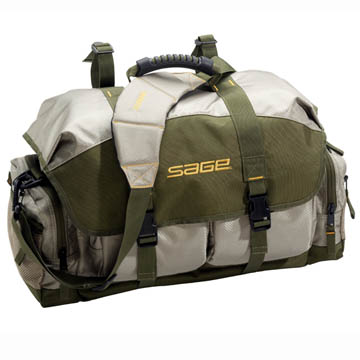
A very good bag is the Sage DXL. It is large enough to contain most everything that a stillwater angler should carry. This is especially true if you are fishing out of a boat or pram. Fishpond also makes some great bags as well as Cabelas.
__________________________________________


The Sage DXL Bag

______________________________________

Pocket Bags For Pontoon Boats

I have a pontoon boat that I fish from. If you are a pontoon boat guy or gal, Outcast makes large pontoon boat pocket bags that can hold most if not everything you will need on a day's outing. You may need to be a little more selective with the amount of extra spools and lines you carry, but you can usually rig a storage box on the rack behind the seat to carry extra items.

______________________________________


The Outcast XL Splashproof Pocket Bag


______________________________________

The Items you Need to Carry

There are six main categories to consider when outfitting a gear bag;

(1) Reel Spools & Lines
(2) Leaders and Tippet
(3) Accessories
(4) Fly Boxes
(5) Safety and Comfort
(6) Miscellaneous Items.

Category #1 - Fly Rods, Reels, and Lines

It is recommended to carry a minimum of two fly rods, so you will need at least two good quality reels that will be rigged and ready to go. I usually have one rigged with a floating line and one with a clear camo. The number of extra spools and lines you need to carry in your kit bag depends upon time of the year, the physical make up of the lake, and the number of fly rods you intend to carry. In a boat you can carry more. In a float tube or pontoon boat typically two.

The lines you should carry or have available are;

(1) A Weight Forward Floating Line
(2) A Clear Camo Intermediate Line
(3) An Additional WF Floating Line. A second floating line can be particularly handy during a chironomid emergence. Where regulations allow, an angler can work two floating lines, one with and indicator and one without.
(4) A Traditional Intermediate Line. Depending upon the manufacture these sink slower than most clear intermediates which tend to sink at a type 2 rate. Intermediates are the perfect choice for creeping scuds, leeches or damsel nymphs over shoals or along shorelines.
(5) A Clear Tip Line - The Clear Tip Line is also an excellent addition. This line is ideal for deep, long leader nymphing, as well as working flies through the shallows. Clear tip lines offer a different retrieve angle that can sometimes make all the difference.
(6) A Type 3 Full Sinking Line. - The Type III line will cover most of your deeper presentations
(7) A Type 6 Full Sinking Line - The type 6 line is ideal for working deep reaches, stripping leeches and dragon patterns over the shoals or crawling buoyant flies over sunken weeds and debris.

Category #2 - Leaders and Tippet

Never leave home without a good selection of leaders and tippet. Leaders and tippet are the critical connection between the fly and the angler and are sometimes overlooked. Depending upon leader set up preference, carry butt material for long leader setups or braided loops. You will use both types of leader connections depending on the line and presentation. For example, for a floating line, long leader system begin with 2-3 feet of .025"to .030" butt section and add a tapered leader and tippet for length.

Always keep your kit bag stocked with a good selection of tapered leaders from 9 to 15 feet. These are items that can get overlooked. Who wants to get to the lake and then find out they forgot to restock their leaders. Make it a habit to restock.


Tippet sizes should vary from 3X down through 6X depending upon conditions. As a general rule the clearer the water the finer the leader and tippet. Stock your kit bag with tippet spools that match leader strength in both fluorocarbon and co-polymer. Use fluorocarbon for clear conditions and sunk flies. Co-polymer tippet is fine for stained waters and dry fly presentations as it does not drag flies beneath the surface. Fluorocarbon will sink which is not a good idea for dry fly presentations.

Category #3 - Accessories

There are many accessories that a well stocked kit bag should have inside.

  • Thermometers are a critical tool as water temperature dictates fish activity and feeding as well as insect emergence's. Knowing the preferred temperature range of rainbow trout (55F-65F) allows fly fishers to eliminate non productive water. Using a traditional thermometer on a string, anglers can vertically probe the water and locate fish.
  • Nippers. When it comes to nippers have good pair or even better two. Purchase a key floaty and attach your nippers to it. This helps when they accidentally flip over the side in the water. It's also a good idea to place your nippers on a retractor and attaching them on the shirt or jacket.
  • Hemostats or forceps are necessary to crimp barbs, remove hooks from fish and friends, or even set indicator depth. If possible look for a pair with cutters.
  • Bell Sinker - A bell sinker works for fine tuning indicator depth. Attach a beg sinker to your deepest fly, attach your slip indicator to the approximate depth and slowly lower the bell sinker until it hits bottom. Check the depth of the slip indicator under the surface which will tell you how deep your flies will be floating and adjust accordingly.
  • Clothes Peg/Clip - To transfer a fly line using a clothes peg, reel the leader back to the reel. Clamp on the forceps between the stripping guide and the reel preventing the leader from snaking back through the guides. Cut the leader and replace the spool. Reattach the leader to the new line and you are ready to go. No more adventures standing in a boat feeding line through rod guides.
  • Knot Tying Tool - Knot tyers for forming nail knots are handy if attaching leaders or butt sections to a fly line is a preferred set up.
  • Indictors - Carry a good selection of sizes, types and colors. It is recommended to carry, slip Indicators, corkies and yarn indictors. Yarn indicators cast easily and work well in shallow clear waters where the splat and look of a corky may spook wary trout.
  • Shot - When using floating lines in windy conditions weight is often needed to aid presentation. Include a selection of split shot or non-toxic putty.
  • Swivels - Barrel swivels are another option. A small bag of #12-#16 swivels should suffice.
  • Floatant, Sinkant, Line Cleaner - Include floatant, leader sinkant and line cleaner. Use both paste and powder floatant. Apply paste floatant prior to casting. Dry fly powders are a desiccant that quickly dry sunk or trout slobbered flies. Sinkant degreases leaders and tippet, a necessary step when fishing dry flies on calm clear days.
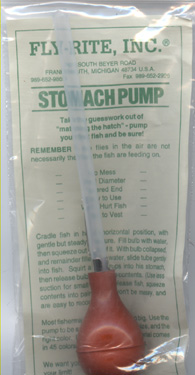
  • Throat Pump - Throat pumps are a valuable accessory but should only be used on fish larger than 14 inches and if the angler is comfortable doing so.
  • Vials or White tray - This allows for clear inspection of the contents guiding fly selection and determining feeding depth. Bottom dwelling contents would suggest presenting patterns just above the weeds. Conversely, emergers and adults would indicate fish are cruising near the surface.
Category #4 - Fly Boxes

Fly Boxes - After years of experimenting I prefer smaller fly boxes that store easily in the kit bag. Use a label maker to identify the contents so time isn’t wasted looking for a favorite pattern. Clear compartmentalized boxes are ideal for dry flies as they tend not to squash hackle. Choose a sorting system that makes sense, group them by food type; chironomids, caddis and mayflies, leeches, dragons and damsels, scuds, boatman and backswimmers and dry flies.

Category #5 - Safety and Comfort Items

Safety and comfort items typically have nothing directly to do with fishing but everything with an enjoyable day on the water.


  • Sunglasses - In addition to providing eye protection from errant flies polarized sunglasses are critical to penetrating the sun’s glare and seeing into the water. Underwater obstructions, weed beds, drop offs, migrating invertebrates and cruising fish are easily seen. Keep the glasses in a protective case when not in use and make a regular habit of cleaning the lens.
  • Sunscreen and lip balm are recommended kit bag additions, especially for the fair skinned.
  • Band-Aids manage small nicks and cuts as well as providing fore finger relief from line burns caused by fleeing trout.
  • A small bottle of Aspirin, Advil or Tylenol handles any dehydration headaches that pop up.
  • A roll of toilet paper in a Ziploc bag is a welcome sight for obvious reasons.
  • Keep a small towel in the bag for wiping wet hands. On cool days letting hands dry through evaporation leads to frigid digits in short order.
Category #6 - Miscellaneous Items


  • Camera - Never leave the shore without a camera. A DSLR or small point and shoot system adds to the experience providing lasting memories.
  • Include a pen and note pad in a plastic bag to record detailed notes of the day’s experiences and observations. This habit reduces the learning curve as important items are not forgotten. Keep track of everything, including weather patterns, diet analysis, hatches, successful patterns, structure types, leader set ups, presentation techniques and any general observations. This information is key to a fly fishers growth and development.
  • Fishing license.
Summary

Having confidence that you have everything you need when your are going fishing is very important especially when a fly shop is hours away. having what you need lets you concentrate on what you've journeyed for, fishing..

A well thought out and stocked kit bag plays a pivotal role in becoming a successful stillwater angler. This often goes as an unrecognized role fly fishing stillwaters. Knowing your kit bag it is complete and stocked allows you to focus on the other variables on the stillwaters. There are enough uncontrollable aspects to a day’s fishing. Get organized, and get out there ad have some fun!

Wednesday, July 30, 2014

Top 10 Habits for Success on Stillwaters

Phil Rowley is a strong proponent of being prepared when fishing stillwaters. This means having consistent and good habits. This also means having your equipment in order, knowing the entomology and locomotion of the bugs you will find in stillwaters and maintaining good and positive energy.

Here is a summary of Phil's Top 10 Habits for Success on Stillwaters. I was introduced to his top 10 Habits at a "Stillwater School" he put together in Idaho. If you every get a chance to attend one of Phil's Stillwater Schools or Seminars you won't be sorry. You can check out Phil's website at www.flycraftangling.com for lots of tips on fishing stillwaters or check out his schedule of events for schools and seminars.


(1) Equipment - Everyone should purchase a good kit bag and stock it with all the essentials for stillwaters. Dedicate this bag to stillwaters and don't try to have one bag cover both streams and stillwaters. Use two rods and carry multiple lines. Here's some of the equipment you will need to add to your stash.


  • Kit Bag - Maintain a well equipped Stillwater bag and restock as soon as possible. Sage makes a good one. You can also check out Fishpond and Cabelas. Just make sure its big enough and if possible water proof or at least water resistant.
  • Rods - Always rigg two Rods. I'd recommend a 9'6" or 10' six weight and a 9'0 or 9'6" 5 weight. The longer the better. Of coarse, the size of the fish you are searching for may dictate other choices.
  • Lines - A well prepared stillwater angler should carry a Floating, Intermediate, Clear Camo, Outbound Hover, Sinking Type III through Type VII. If in a pinch for sinking lines, you can get by with two full sink lines. Carry a Type III and a Type V or Type VII.
  • Sunglasses- Always wear polarized glasses. You can see through the water and they add a level of safety. Who wants to get a fly stuck in their eye?
  • Watercraft - You can set up a Pram, Pontoon Boat or Belly Boat for fishing stillwaters. Make your choice, portability, budget and comfort all are factors, they all work.
  • Notepad - Keep a notepad in your kit bag. You can get waterproof ones from a surveyor's supply store. They use them for doing their outdoor surveying work.
  • Extra Nippers and Forceps - Always carry extra nippers and forceps. You never know what can get loose when you're fishing in a body of water.
  • Indicators - Carry Slip Indicators, Corkie Indicators, and yarn indicators in different sizes. You may need them all in different conditions.
  • Split Shot and Swivels - Carry an assortment of split shot and swivels for rigging your slip indicators.
  • Floatant and Desiccant - Carry your favorite floatant and Desiccant to keep your dries and emergers where you want them. Learn how to apply them properly.
  • Sunscreen and Insect Repellent - Can't do without it!
  • Tylenol, Advil and Benedryl - Carry a bag with these items. You never know when you or a friend my need them.

(2) Electronics


  • Fish Finder - The most common fish finder is the Hummingbird Fishin Buddy. The model 120 has side finding ability and with a black and white display runs about $160. Make sure you know all the features of your fish finder and which are applicable to your fishing methods.
  • GPS - More and more people are using GPS systems to mark shoals and productive areas of the stillwaters that they fish. Mark it. Find it Later.
(3) Observation - Keep your eyes and ears open and watch what mother nature is telling you.


  • Research and Obtain Local Knowledge - Use the web or call local fly shops to get as much recent information so you are prepared. Talk to fellow anglers.
  • Make Notes of Weather Conditions - Water Temperature and Clarity - The water temperature can tell you how active bugs may be or where they may be located. The clarity can dictate the way and length that you rigg your leader.
  • Examine Shoreline Vegetation - There are almost always bugs hanging out along the shoreline. You can get a good idea of the bug life and what stages are present by being a shoreline detective.
  • Check out Spider Webs - Spiders catch and eat stillwater bugs. You can see what they've been eating and can then get a good idea of what has been hatching.
  • Turn over Rocks and Logs - You can often find bugs hiding amongst the weeds, rocks and under submerged logs. Leeches are often found hiding in shoreline vegetation. You can get an idea of their size and coloration.
  • Take notice of Bird Activity - As we know when fishing rivers and streams, birds buzzing the water signify that something is hatching. This can also happen on stillwaters and can give you a clue as to where to fish in a larger lake. Bugs sometimes emerge and hatch in certain areas of lakes and the birds are a good indicator of where a hatch may be happening.
  • Check out Surrounding Topography - The surrounding topography can give clues to the depth and topography of the lake's structure. For instance a steep slope entering a lake will typically mean the water in that area continues to gain depth quickly with little shoal area. A flat shoreline will typically indicate shallower depths and shoal areas nearby.
  • Study the Water's Surface - Look for bugs on the water. Use an aquarium net to catch them. Look for rise rings and rise forms. Do you see callibaetis struggling to hatch? Are there blue damselflies buzzing around. Are the rise forms showing a bubble, which means they are taking duns or is there a bulge with a dorsal fin and then a tail, which is an emerger rise. Determine if the fish are feeding on top or just below the surface.
  • Look Into The Water. Look for weed beds, shoals and drop- offs. How clear is the water? Are there any bugs swimming around? Damselflies swimming to shore or structure? Do you see fish? What Depth?
  • Pay Attention for Shucks - For instance, look for the shucks of callibaetis mayflies and chironomids that may have recently hatched.
  • Observe Other Anglers - You should pay attention to who's catching fish and where they are fishing. You may be able to determine what method they are using or what type of retrieve.
  • Make Notes and Maintain a Diary - One of the best things you can do if you want to become a better fisherman is to take notes or maintain a diary every time you get out fishing. Record the weather conditions, water temperatures, flies and methods used. What worked as well as what didn't. Record anything that may help you at a later date.
(4) Water Conditions - The wind, weather and water conditions (Temperature and Clarity) affect decisions when on stillwaters.

  • Water Conditions affect the choice of;
(a) Retrieve method
(b) Line Choice
(c) Pattern Selection
(d) Presentation depth
  • Water Temperatures Affect the;
(a) Fish and Invertebrate Activity
(b) Location of Fish
(c) Retrieve Speed

(5) Approach


  • Stealth is Always the Key - Always maintain as much stealth as possible when fishing. Be methodical and don't hurry.
  • Lower Anchors Gently - Don't make a big splash when you drop the anchor and they enter the water. Fish don't like grenades.
  • Keep Noise to a Minimum - Especially when fishing out of a boat or a pram. When using a kick boat or pontoon boat, kick silently and don't splash when kicking.
  • Use Carpeting - If fishing from a boat or pram cover the bottoms with carpet or other noise dampening materials.
  • Approach - Approach from the deep water when setting up to fish an area.
  • Move About Silently - Drift, row, kick or use an electric motor. Don't use an outboard motor to survey the lakes topography or to move into your fishing position. Shut off the motor and glide into position.
  • Stretch your Line and Leaders to Remove Memory. Fly lines with coils in them will not fish properly or allow you to keep a more direct contact to your flies. Take the time to stretch out your fly lines and leaders.
  • Use a Correct Rod Position - Keep your tip in the water. For the most part your rod tip should always be in the water up to 2 or 3 guides. This keeps you in direct contact and enables you to make consistent retrieves.
  • Strip out slack once your cast has landed - Keep contact with your flies as soon as they land. Strip in excess line instead of re-casting. When using intermediate and sinking lines fish will often take your fly as it sinks. If you don't keep tight to your flies you will not detect the take.
  • Make straight line presentations - A straight line cast shot above the water and then allowed to straighten out and fall to the water is the best way to keep in contact with your flies as soon as they hit the water. It is also the most stealthy presentation.
  • Don't water load your casts - When wanting to maintain stealth, using water load casts is like throwing rocks into the area you want to fish. Learn to keep your line in the air and minimize the false casts.
  • Use your watch to countdown retrieves - Know your sinking lines sink rates and what depth you want to fish. Calculate the rate of sink, times the desired depth to get the time the line needs to sink. Use your watch to time the sink. Be patient and wait. You can jig the line as it sinks to get the fly moving and stay in contact. A fish may take it on the way down.
  • Slow down your retrieves - Fish your flies slower than you might think. When you think you're going slow, go slower. This is when you are using imitative retrieves that match the locomotion of the natural.
  • Watch Your Line - If using a floating line watch the tip where it enters the water. Keep an eye for subtle movement, set when it moves. If you don't set, you'll never know if it was a fish.
  • Fish the hang when retrieving - How many times does a fish take right as you lift the rod to re-cast. Fish your flies right to the end. Pay attention when you pick up to recast. Let the flies hang for a bit, lift and hopefully a fish will have been following and will take right at the end.
(6) Droppers and Loop Knots


  • Fly Selection - Vary the sizes and colors of your flies when using droppers, especially when you are searching.
  • Dry Dropper - Suggest different stages of the bug you are imitating by using a dry dropper. Use a dry, emerger or cripple on the surface or in the film and use an imitative nymph as a trailer.
  • Droppers When its Windy - Using droppers add weight in windy conditions.
  • Cover Different Depths - Droppers cover different depths, You can rigg two or more nymphs when fishing a slip indicator to cover different depths.
  • Use an Attractor on the Point - Using a flashy or larger attractor pattern can draw the fish's attention to your more imitative flies trailing.
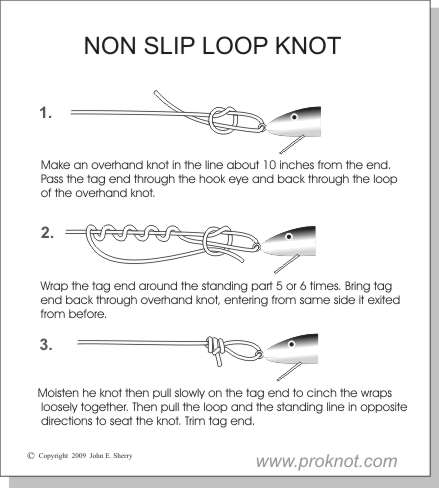
  • Non Slip Mono Loop - Use a non-slip knot to attach all your flies. It is a strong knot and simple to tie. It allows your flies to be presented in a lifelike manner with the open loop.
(7) Entomology and Throat Pump


  • Do your Homework - Study to have a basic understanding of all key stillwater food sources.
  • Locomotion - Study the locomotion of all key stillwater food sources so you can develop retrieve techniques to match them.
  • Emergence - Study and learn emergence behavior. What time of year do they emerge? What time of day? How does the weather affect their emergence?
  • Seasonal Availability - Learn the seasonal availability of all the key stillwater food sources. In the spring what bugs are available to the trout? What about summer and fall?
  • Throat Pump - Learn to use a throat pump properly and remember that the welfare of the trout is paramount. When you purchase a "Throat Pump" they are usually called "Stomach Pumps". Do we want to pump the contents of the trout's stomach? No! When properly using a throat pump, only sample what is in the trout's throat. That's what they are currently eating anyway.
(a) Using a throat pump will identify the food sources the trout is currently feeding on.

(b) Using a throat pump will help determine if the fish was actively feeding or just happened upon your fly.

(c) Using a throat pump can help determine the feeding location within the water column by the type of invertebrates in its throat.

(8) Versatility
  • Don't get Static - Avoid one dimensional line or presentation techniques. If one thing isn't working change. Change depths, change retrieves, change lines, change flies, change locations. Get it?
  • Lines - Learn how to use every line in your arsenal. Learn each lines sink rates and how they relate to getting to the desired depth to be fished. Count the lines down. Use your watch.
  • Double Anchors - Always use double anchors when fishing out of a boat, pram or pontoon boat. This will allow you to present your flies in a controlled manner.
  • Drogues - Learn how to use drogues (water socks) when drifting in the wind and presenting flies. This will help control the speed you are drifting.
  • Retrieves - Know all the different retrieves as they relate to your prey. Vary your retrieves and pattern of the retrieves.
  • Imitative and Attractive Retrieves - Learn and use both imitative and attractive retrieve techniques. Learn how the various retrieves relate to the locomotion of the invertebrate you are imitating.
  • Move - Move often to cover water
(9) Patience
  • Patience - Patience is a virtue that all fisherman must develop.
  • Patience - Allow your lines and flies to sink to the correct depth. Count them down.
  • Patience - Use your watch for accurate sink times
  • Patience - Know the sink rates of all your lines and present then correctly
(10) Attitude & Belief
  • Fish with "Quiet Confidence"
  • "PFA" - Always show up to fish with "PFA", Positive Fishing Attitude
  • Remember to be patient
  • Channel frustration positively
  • Belief comes from experience
Summary

If you integrate even a portion of Phil's Top 10 habits you will be on your way to becoming a better and accomplished stillwater fisher person.

Wednesday, September 4, 2013

Callibaetis Mayflies


If you are going to be fishing stillwaters, the number one mayfly that you need to be familiar with is the Callibaetis. They are the most important stillwater mayfly of all. There are some respected anglers here in Northern California that believe that there is no insect more important to the stillwater angler.

The damselflies provide exciting angling for large trout, and on many lakes midges are of major importance, but as a searching pattern you can't go wrong tying on a Callibaetis nymph.

Callibaetis are found in many types of stillwaters and especially in the waters where we search for trout. If you are fishing a lake that has a good supply of weeds, you will have probably find lots of Callibaetis.

The Callibaetis nymph is a stillwater bug that is available 365 days of the year and it predictably hatches throughout the entire fishing season. If you had to design a stillwater bug for stillwaters for fly fishers, the Callibaetis would be it. It acts predictably and trout key in on that predictability. All stillwater anglers should take time to understand the life cycle of the Callibaetis will benefit from the time spent with trout at the end of the line.

The Life Cycle of a Callibaetis Mayfly

The Callibaetis belongs to the Baetidae family of mayflies. The Baetidae family of mayflies are multi brooded. The nymphs mature exceedingly fast and several generations will emerge within a single season. Most other mayflies hatch only once in a brief annual flurry.
The Callibaetis is a prime example of a mayfly nymph with a perfectly proportioned body. The head is slightly narrower than its shoulders and the slender body tapers to three equal length tails that are about as long as the body. It has heart shaped gills that fringe each flank of the abdomen. The sweeping antennae twice as long as the head is wide. The only other stillwater nymph that might be confused with the Callibaetis is the Siphlonurus whose antennae are short and stubby by comparison.

The Callibaetis nymph is a chameleon. The nymphs can change color quickly to match their environment. Tie colors of this nymph to match the colors of the vegetation of their stillwater environment. You can tie the nymph in earth tone hues like natural or olive hares ear or use pheasant tail.

The nymphs have a semi-rigid exoskeleton that must be periodically molted. The typical Callibaetis might undergo a twenty or more such molts throughout the winter.

Early in spring the callibaetis began their hatching process. Gasses in their exoskeleton begin to fill their bodies. As this pressure builds, the exoskeleton starts to swell and the nymph becomes buoyant. As the exoskeleton stretches it radiates a shimmering glow. When this happens the nymphs starts crawling upwards. This can be a mass emergence with the nymphs crawling up the reeds, and other underwater structure towards the surface.

Often when these emerging nymphs lose their footing or try to swim, the buoyancy lifts them away from their structure and they desperately swim back down to the protective cover. This can happen over and over. This is prime feeding time for the trout. This happens every morning and all season all season long. The trout of stillwaters get accustomed to this daily rhythm. For the stillwater angler this is prime time.

How to Fish the Nymph Stage of the Hatch

It pays to get out on the water around nine am. You can use a floating or intermediate line. I prefer using a Cortland Camo Intermediate line. Rig up with a standard nine foot tapered and extend it with fluorocarbon tippet to 1 1/2 time the depth of water you intend to fish. We're talking the tippet section here, So in 6 feet of water that's 9 feet of tippet. That makes your total leader length 18 feet. In water that doesn't have good clarity you can cut that back to 12 or 14 feet total. You can start with 5x and if the fish aren't cooperating go smaller with 6x.. You then need to determine the depth and clarity of the water.

Tie on your callibaetis nymph imitation of choice of the appropriate size. Work your line out as best as you can with the extra long leader. It's OK if the tippet doesn't straighten out. Count down the nymph until you see it hit the weeds. You'll know it has got there when the vee shaped wake from the sinking leader stops. Mentally record the seconds it took to get the nymph to the weeds. Re-cast and count it down again. Try a very one very slow, very long strip until the stripping arm and hand are extended behind you. Trap the line against the cork with rod hand and let the nymph fall. Watch the vee of the tippet for the take. The long slow strip does a good job imitating the nymph being buoyed to the surface and the subsequent fall of your pheasant tail mimics the real nymph’s frantic return to cover.

Watch the tippet as it is your best indication of a take. You may not feel the take. Tighten up with any un-natural movement. A stop, a change of direction, a dimple. Using tippet as small as 6X tippet might seem too small but with a long leader it has tremendous stretch and will handle most trout, even hogs. Just make sure its fluorocarbon. The small diameter tippet allows your nymph to cut through the water.

Fishing the Emerger and Dun Stage of the Hatch

The Callibaetis nymphs start to hatch as the morning progresses. They hold just beneath the film with only the hump of the thorax breaking the surface film. Soon the thorax splits and the adult emerges. Its head and then its legs crawl out out of the exoskeleton. It will spread its legs out across the water and then draws the wings and abdomen out of the shuck. Once this is accomplished only the tail remains in the husk and then it finally pulls free . The dun then drifts across the waters surface as the wings harden.

The coloration of the Callibaetis changes as the season progress. In the spring the insect is dark sooty gray and as the hatches progress through the season, they get increasingly lighter hues. In the fall, as temperatures drop, the mayflies once again emerge in the darker colors. This is said to be natures way of absorbing more heat from the sun. The underneath side of a Callibaetis are always lighter than the top. The wings of the Callibaetis duns will have distinctively light colored veins that contrast with the relatively dark wings giving them a speckled effect. Their common name is the speckled dun.

When fishing and choosing which stage of the Callibaetis to match it is good to remember that as the nymphs drift up from the weeds and converge on the surface, the trout sometimes get selective to the emerger and cripples. Fish will often disregard the nymphs and duns and focus on the emergers. The emergers are hapless prey and the fish can take their time picking them off. They can't swim or fly.

Two "Go To" paterns to imitae the Callibaetis emergers are a Quigley's Cripple and a Bivisible Dun. You do not have to match the size of the emerging dun when fishing emerger patterns. A size twelve nymph can be fished with size 10 emerger. The trout aren't as selective at this stage.

Callibaetis Spinners

The Callibaetis duns will leave the water and fly to stream side vegetation. They will molt into sexually mature spinners. The spinner has translucent wings with only a trace of splotching on the leading edge. About mid morning the next day, or sometimes in the evening, droves of males rise from the stream side vegetation and form clouds of insects that fly high into the air and flutter back towards earth.

As they are rising and falling above the stream side vegetation the fall males are releasing pheromones that waft downwind and attract the females. The females flutter into the bobbing mass of males. The insects briefly copulate in flight and the males go off to die.

Just about the time the morning hatch is winding to a close, the spinners arrive to lay their eggs. The female Callibaetis whisk along the surface of the water and dap their abdomens into the film to release showers of fertile eggs. The eggs hatch almost immediately and the cycle begins anew.

For fly fishers, as soon as spinners start landing on your arm or the trout begin to refuse your emerger or cripple imitation, tie on a spinner imitation.


To imitate a Callibaetis spinner the best spinner patterns are barely there. Try a pattern like a CDC Biot Spinner. The CDC biot spinner works well because it uses sparkle organza and the fluted CDC feathers trap air like the real spinner wings.

Remember the "Multi-Brooded" aspect of the Callibaetis
Beacuse the Callibaetis is multi brooded. It emerges in the spring as a size twelve. About six weeks later, the progeny from the first hatch will emerge but they will be a size fourteen. Six weeks later the next brood will hatch and be a size sixteen and so on until the end of the season when Callibaetis in October are popping off in a minute size twenty.

Every six weeks or so will be a major emergence period, but enough bugs are out of sync that Callibaetis hatches can be counted on virtually every day of the season. The nymphs of the season’s last brood having all winter to grow, will emerge the following spring in a succulent size twelve to start the cycle once again.

Summary

So, you can almost never go wrong using a Rickards Callibaetis nymph as a searching pattern in any stillwater that you find anywhere. Tie nymphs in sizes from 14 to as small as size 20 in colors to match the vegetation in the lakes you are fishing. Good luck!